Lighting Techniques for Live Video
Controlling photons to maximize camera sensor performance and visual aesthetics.
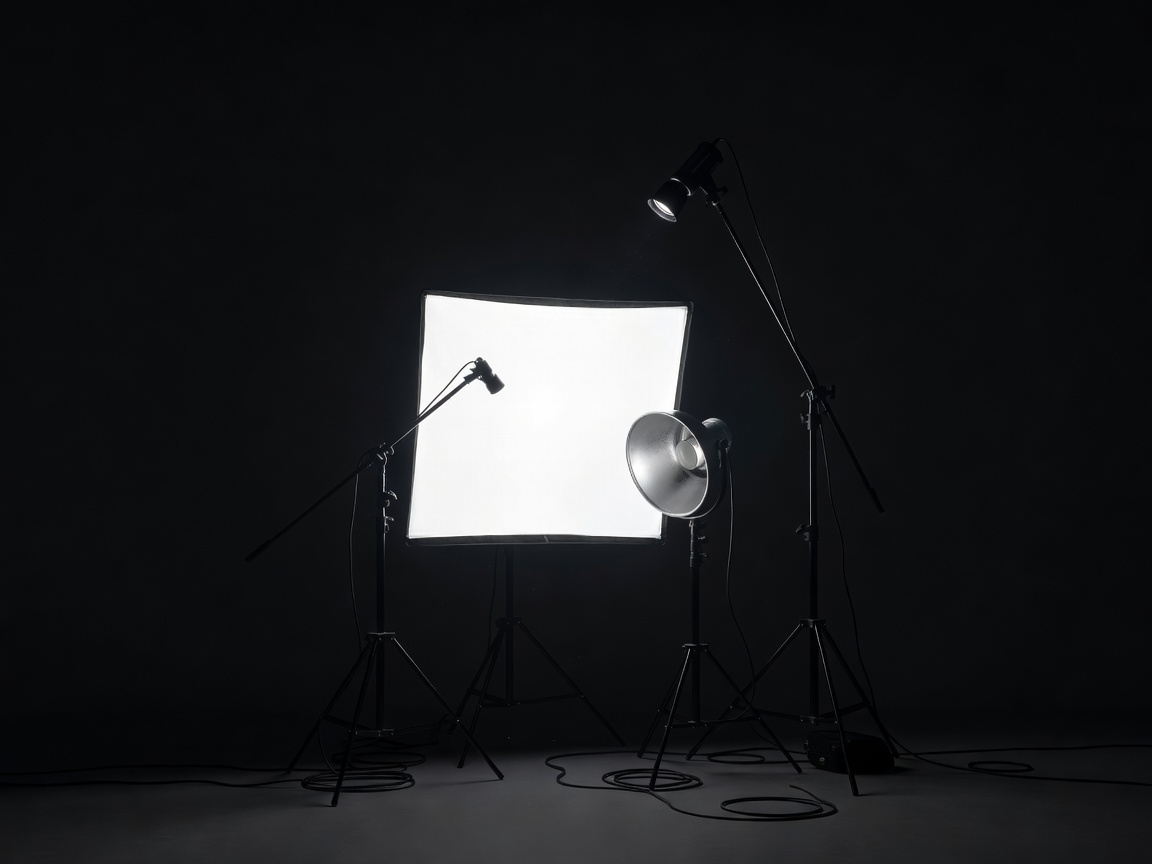
A camera sensor does not record objects; it records the light reflecting off those objects. Even the most expensive broadcast camera will produce grainy, unappealing footage if starved of proper illumination. Implementing a structured lighting design is the most cost-effective way to elevate the production value of a live stream from amateur to professional.
The Three-Point Lighting Standard
The core philosophy of traditional studio illumination is the three-point lighting setup. This technique creates depth, separates the subject from the background, and ensures flattering facial exposure.
- The Key Light: The primary source of illumination, typically positioned 45 degrees to the side and slightly above the subject. The key light should be heavily diffused—usually through a softbox or diffusion gel—to create soft shadows that wrap gently around facial features. Hard, direct light causes harsh shadows and specular highlights on the skin.
- The Fill Light: Placed on the opposite side of the key light, the fill light's purpose is to reduce the contrast ratio by softening the shadows cast by the key. It operates at a significantly lower intensity (often 50% or less of the key light). Reflectors can often substitute for dedicated electronic fill lights in smaller studio spaces.
- The Backlight (Hair Light): Positioned behind the subject, aiming toward the back of their head and shoulders. This sharp, directional light creates a glowing edge that physically separates the subject from the background, creating a three-dimensional illusion on a two-dimensional screen.
Color Temperature and White Balance
Light is not inherently white; it carries a color temperature measured in Kelvin (K). Natural daylight is exceptionally blue (around 5600K), while traditional incandescent bulbs produce a warm, orange glow (around 3200K). Mixing different color temperatures in a single studio space confuses camera sensors, resulting in unnatural skin tones and muddy colors.
Professional broadcasters establish a unified color temperature baseline. If the studio possesses windows, the artificial lighting is usually set to daylight (5600K) to match the incoming sun. In windowless environments, broadcasters have the flexibility to choose their temperature, though bi-color LED panels allow for dynamic adjustments on the fly. The camera's internal white balance must then be locked to match the primary light source's specific Kelvin value.
Practical Set Design and RGB Accents
Once the subject is properly illuminated, attention shifts to the background. A completely dark background can feel sterile, while a flat, bright background can distract from the subject. The solution lies in practical, motivated lighting.
Using RGB (Red, Green, Blue) LED strips or small accent lamps allows broadcasters to paint the background with color. Introducing contrasting hues—such as a warm orange key light paired with cool cyan background accents—creates color separation, further enhancing depth. It is imperative, however, that these colored practical lights do not spill onto the subject's face, which would ruin natural skin tones.
Mastering lighting requires moving beyond mere brightness and understanding the shape, softness, and color of the light. Controlled illumination reduces the workload on the camera sensor, directly resulting in a cleaner, more professional encoding output.